

If you’ve ever tried to figure out what it takes to protect your art, it can feel like a maze. There are deadlines, files scattered across old hard drives, and that one design you swear you saved somewhere. So let’s make this simpler.
A clear system saves you from the slow panic of trying to remember when you posted that design. Or where you saved the layered file. Or why there are seven versions titled Final and one titled Final_Real. We’ve all been there.
This checklist gives you structure without making your life harder. You can use it whether you’re working with Edwin James IP or sorting things out on your own.
Keep your portfolio links in one place
Make a single list of every site where your work lives.
Your shop. Any print on demand platforms. Stock sites if you use them. Your main social accounts.
When everything is listed together, it becomes easier to confirm publication dates and verify ownership when you need it most.
Identify your key artworks
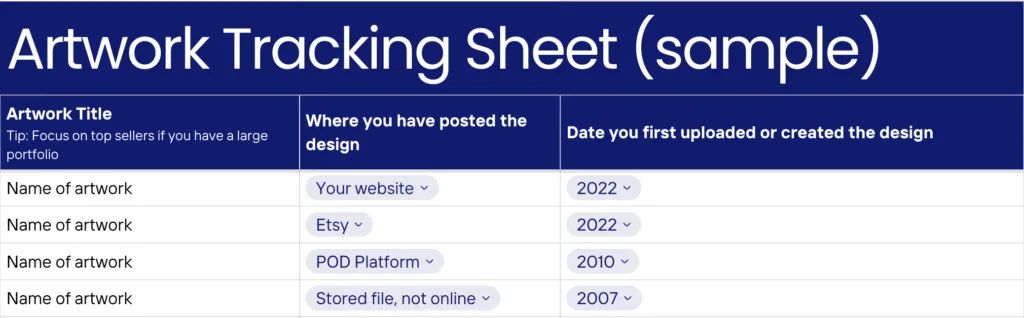
Write down your best sellers and the designs that tend to attract the wrong kind of attention.
These pieces should get the strongest documentation and the earliest registration.
Save your original files and early drafts
Your source files matter. Keep your high-resolution versions, layered files, sketches, and progress shots. Keep those dates intact.
These files are your receipts. Treat them kindly. They prove that the work is yours and that you made it when you said you did.
A simple naming system helps too. Something you can understand without doing forensic work.
Record basic details for each major artwork
For your priority pieces, note:
• Title
• Year created
• First publication date
• Where it first appeared
This is the information lawyers reach for when things get serious, so you’ll be glad it’s already sorted.
Tip: If a piece includes licensed or preexisting elements, make a note this will save you time tracking it down later if needed.
Register your work in batches
Please do not try to register your entire portfolio in one day. That way lies madness.
Start with the pieces that matter most to your income or identity.
Small steps build real protection.
If you sign with us, we manage the registrations for your counterfeited artworks, before the admin becomes more exhausting than the theft itself.
Keep a short record of licences and partnerships
List any licensing deals, collaborations, contractors, or stores officially allowed to sell your work.
Clear authorisation prevents confusion down the road.
Track any past takedowns or disputes
If you’ve filed DMCAs or contacted shops before, make a note of it.
Patterns help. They show where your work is most vulnerable and how long the copying has been going on.
This kind of record also helps demonstrate that informal attempts to stop misuse haven’t worked, which matters if stronger action is needed later.
Create one folder for suspicious listings
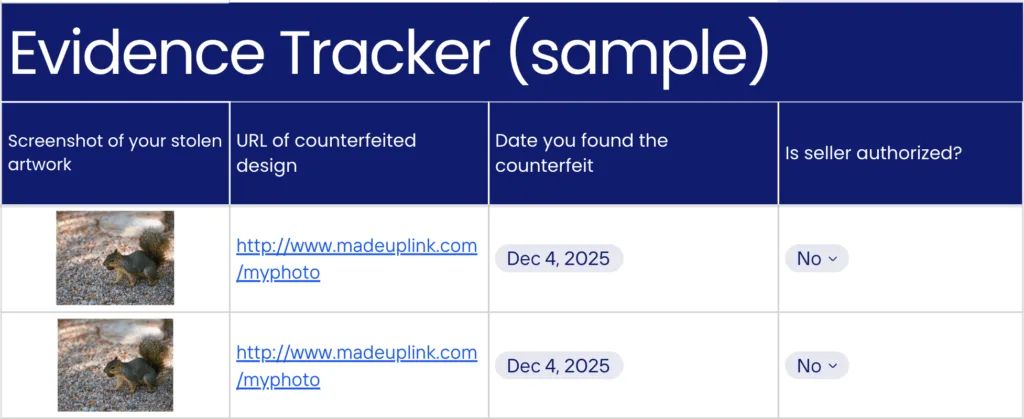
When you come across a copied design, grab a screenshot, save the URL, note the seller, and file it in one place.
Save that investigation for daylight hours. Just get the evidence and close the laptop.
Artist Bio Notes
A short, clear artist bio helps establish your professional identity. It also supports your case if your work is ever disputed. A few sentences are enough.
- How long you have been creating
Write a quick line about when you started.
Example: I’ve been creating art since 2014. - Your style
Describe your work in one or two sentences.
Example: I create whimsical animal illustrations with bold colour and clean lines. - Training or background
Include this only if you want to.
Example: Self taught or Studied illustration at the Academy of Art. - Milestones or achievements
Anything that helps show your creative path.
Example: Featured in print on demand shops. Collaborated with small indie brands.
Review this checklist every quarter
This isn’t meant to be perfect. Give your setup a monthly once over so nothing goes missing or turns into a mystery folder. It makes life much easier when something gets copied.
Have questions?
We have answers! Get in touch with our friendly team. We can walk you through these steps as part of building your case and protecting your work. The process can feel heavy on your own. With the right support, it becomes far more manageable.